Annual Jamboree

10th Annual Jamboree with Johnny Bench

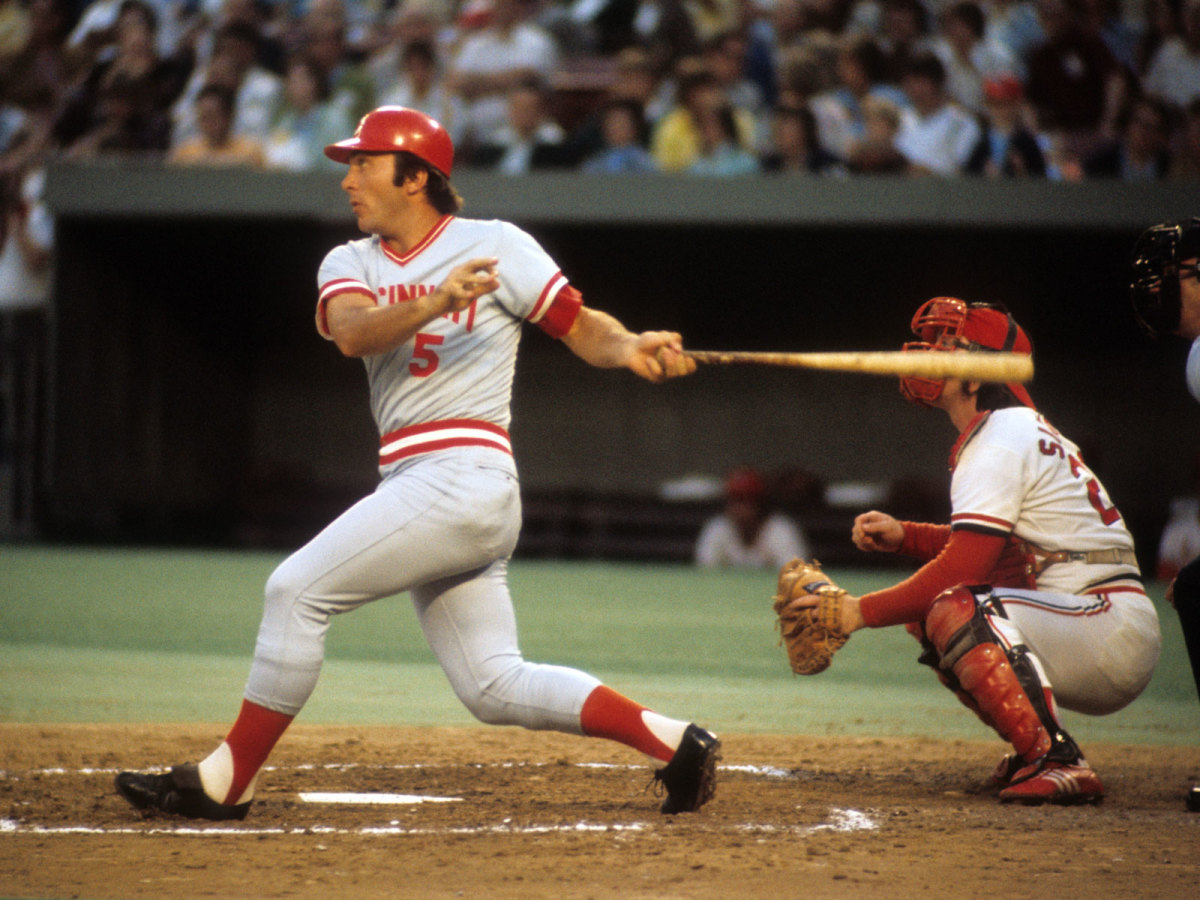
Johnny Bench is an American former professional baseball player who played his entire Major League Baseball career, which lasted from 1967 through 1983, with the Cincinnati Reds, primarily as a catcher. Bench was the leader of the Reds team known as the Big Red Machine that dominated the National League in the mid-1970s, winning six division titles, four National League pennants and two World Series championships. Johnny is widely regarded as the greatest catcher of all time.


A fourteen-time All-Star and a two-time National League Most Valuable Player, Bench excelled on offense as well as on defense, twice leading the National League in home runs and three times in runs batted in. At the time of his retirement in 1983, he held the major league record for most home runs hit by a catcher. He was also the first catcher in history to lead the league in home runs. His record of 45 home runs in a season held the record for the most by a catcher, until Salvador Perez hit 48 in 2021. His 389 home runs and 1,376 runs batted in remain the most in Cincinnati Reds history.

On defense, Bench was a ten-time Gold Glove Award winner who skillfully handled pitching staffs and possessed a strong, accurate throwing arm. He caught 100 or more games for 13 consecutive seasons. In 1986, Bench was inducted into the Cincinnati Reds Hall of Fame and was inducted into the Baseball Hall of Fame in 1989. ESPN has called him the greatest catcher in baseball history.

Born and raised in Oklahoma, Bench played baseball and basketball and was class valedictorian at Binger-Oney High School in Binger. His father told him that the fastest route to becoming a major leaguer was as a catcher. As a 17-year-old, Bench was selected 36th overall by the Cincinnati Reds in the second round of the 1965 amateur draft. Johnny played for the minor-league Buffalo Bisons in the 1966 and 1967 seasons. During the 1967 season, he hit a grand slam against Jim Palmer, (who was our 2014 Jamboree speaker). Jim Palmer would go on to never allow a grand slam in 19 years in the major leagues.

In 1968, his first full year in the big league, the 20-year-old Bench won the National League Rookie of the Year Award, batting .275 with 15 home runs and 82 RBIs. This marked the first time that the award had been won by a catcher. He also won the 1968 National League Gold Glove Award for catchers, which was the first time that the award had been won by a rookie.
During the Vietnam War, Bench served honorably in the United States Army Reserve as a member of the 478th Engineer Battalion, which was based across the Ohio River from Cincinnati at Fort Thomas, Kentucky. This unit included several of his teammates, among them Bobby Tolan and Darrel Chaney. In the winter of 1970–1971 he was part of Bob Hope's USO Tour of Vietnam.

For the last three seasons of his career, Bench moved out from behind the plate, catching only 13 games, while primarily becoming a corner infielder (first or third base). The Cincinnati Reds proclaimed Saturday, September 17, 1983, "Johnny Bench Night" at Riverfront Stadium, in which he hit his 389th and final home run, a line drive to left in the third inning before a record crowd. Johnny retired at the end of the 1983 season at age 35.

Bench had 2,048 hits for a .267 career batting average with 389 home runs and 1,376 RBI during his 17-year Major League career. Bench earned 10 Gold Gloves, was named to the National League All-Star team 14 times, and won two Most Valuable Player Awards.

In 2018 Johnny Bench was the Hall of Fame recipient of the Bob Feller Act of Valor Award, for his service to his country and continued support of the United States Military. Thank you, sir, for your service. Welcome to Chesapeake, Virginia!

Read More
Annual Jamboree

9th Annual Jamboree with Alonzo Mourning

Alonzo Harding Mourning Jr. (born February 8, 1970 in Chesapeake VA) is an American professional basketball executive and former NBA player. Nicknamed "Zo", he started playing at Indian River High School on the football team in 1984. At 6’7 at the beginning of the season the coach had high expectations but Zo’s motor skills had not caught up to his height. The coach suggested that he try out for the basketball team. 

Zo was now 6’8. The era of Alonzo Mourning the basketball player had dawned. Indian River was named #1 at the beginning of the 1985 season. That was a surprise since they only had two returning starters but it was assumed with Zo playing, the team would do well. Zo was young and tall and everyone had their eyes on the inexperienced center. This made him prone to early foul trouble. The coach learned to use Zo off the bench which helped tremendously in those early years.

During his time at Indian River High School he led the team to 51 straight victories and a state title his junior year (1987). As a senior, he averaged 25 points, 15 rebounds and 12 blocked shots per game. He was named Player of the Year by USA Today, Parade, Gatorade, and Naismith. Zo graduated from Indian River High School in 1988 and continued his education 

and basketball career for the Georgetown University Hoyas.  He led the nation in blocked shots his freshman year and was an AllAmerican his last year there.

Zo was selected in the 1992 NBA draft in the first round 2nd pick in the by the Charlotte Hornets behind Shaquille O'Neal and before Christian Laettner. Mourning was named to the league's all-rookie team in 1993 after averaging 21.0 points, 10.3 rebounds, and 3.47 blocks. He finished second to Shaquille O'Neal in rookie of the year voting.

In the 1994–95 season, Zo and teammate Larry Johnson led the Hornets to a 50-win season and reached the playoffs. Zo ranked first on the team in scoring (21.3 per game), rebounding (9.9 per game), blocked shots (2.92 per game), and field goal percentage (.519), and played in the 1995 NBA All-Star Game where he scored 10 points and grabbed 8 rebounds.

On November 3, 1995, after Mourning rejected Charlotte's contract extension, the Hornets traded him to the Miami Heat.

Mourning would immediately serve as the centerpiece of the Pat Riley-coached Heat, and in his first season in Miami he averaged 23.2 points, 10.4 rebounds and 2.7 blocks per game as Miami made the playoffs before being swept in the first round by the 72-win Bulls. Mourning played in the 1996 NBA All-Star Game.

In July 1996, Mourning signed a seven-year contract with the Heat. In the 1996–97 season, the Heat would go on to win a then franchise-record 61 games, finishing second in the Eastern Conference behind the defending champions Bulls, while Mourning averaged 19.8 points, 9.9 rebounds and 2.9 blocks per game. In the playoffs, Miami defeated the Orlando Magic in five games, and advanced to the conference semifinals against the Knicks. Mourning scored 28 points in Game 6, followed by a 22-point, 12-rebound performance in Game 7 to help Miami advance to the Eastern Conference Finals, a franchise first, to face Chicago. The Bulls took a 3–0 series lead, and Mourning guaranteed a victory in Game 4 as the Heat won 87–80. However, in Game 5 the Heat were eliminated by the Bulls.

Mourning signed a four-year deal with the New Jersey Nets in July 2003 as a free agent. On November 24, 2003, Mourning retired from the NBA due to complications from kidney disease.

On November 25, 2003, Mourning's cousin and a retired U. S. Marine, Jason Cooper, was visiting Mourning's gravely ill grandmother in the hospital. Mourning's father was present and informed Cooper that Zo was retiring that day from the NBA because of a life threatening kidney disease, focal segmental glomerulosclerosis, the same problem that Sean Elliott had in 1999. Cooper asked if there was anything he could do, and began to contemplate donating one of his kidneys to his estranged cousin, whom he had not seen in 25 years and whom he only knew through basketball. Cooper was tested for compatibility, along with many other family members and friends (including fellow NBA center and good friend Patrick Ewing); during his grandmother's funeral, Mourning received the news that Jason Cooper was a match. Mourning underwent a successful kidney transplant receiving Cooper's left kidney on December 19, 2003.

In 2004, he started practicing with the Nets again, and made the team's regular season roster during the 2004–05 season.

He did not play a significant role with the Nets and openly complained to the media that he wanted out of New Jersey, especially after the team traded away Kenyon Martin. Mourning was traded to the Toronto Raptors on December 17, 2004.] Mourning never reported to the Raptors, and was bought out of his contract on February 11, 2005. Raptors team officials later said that he did not meet the medical conditions to play for the team. Mourning then finished the season with the Heat being paid a second salary, the veteran's minimum.

Zo’s tenacity on defense twice earned him NBA Defensive Player of the Year Award and perennially placed him on the NBA AllDefensive Team. Mourning made a comeback and later won the 2006 NBA championship with the Heat. Mourning announced his retirement from the NBA on January 22, 2009. In his press conference he said, "At 38 I feel like I've physically done all I can for this game. One month later, the Heat announced that they would retire Mourning's number 33 jersey, making him the first Heat player to be so honored. The jersey retirement ceremony occurred on March 30, 2009, when the Heat hosted the Orlando Magic. During the extended halftime ceremony, Mourning was introduced by Florida Governor Charlie Crist; former Georgetown University basketball coach John Thompson; Basketball Hall of Famer Patrick Ewing; Heat players Dwyane Wade and Udonis Haslem; and Heat head coach Pat Riley. 

Since June 2009, Mourning has served as VP of Player Programs and Development for the Heat which covers community outreach and mentoring young players.

In May 2009, he was named to the Hampton Roads Sports Hall of Fame, which honors athletes, coaches and administrators who contributed to sports in southeastern Virginia. In 2010, Mourning was inducted into the Virginia Sports Hall of Fame in recognition of his outstanding high school, collegiate, and professional career as well as his commitment to volunteer service in the communities in which he has lived and worked throughout his life. In August 2014, Mourning was inducted into the Naismith Memorial Basketball Hall of Fame, and in August 2019 he was inducted into the FIBA Hall of Fame.

In 1997, Mourning established Alonzo Mourning Charities Inc. to aid in the development of children and families living in at-risk situations and provides support and services that enhance the lives of youth of promise. After being diagnosed with focal glomerulosclerosis (FSGS), Mourning launched Zo's Fund for Life, a campaign which seeks to raise funds for research, education, and testing to fight focal glomerulosclerosis. Funds are allocated toward research for a cure, education for doctors and the general public, testing for early detection and a fund for those not able to afford medication.

In 2007, Mourning along with Andre Agassi, Muhammad Ali, Lance Armstrong, Warrick Dunn, Mia Hamm, Jeff Gordon, Tony Hawk, Andrea Jaeger, Jackie Joyner Kersee, Mario Lemieux, and Cal Ripken Jr. founded Athletes for Hope, a charitable organization, which helps professional athletes get involved in charitable causes and inspires millions of non-athletes to volunteer and support the community.

In 2003, he also founded the Overtown Youth Center for underprivileged kids, located in Miami, Florida. The program aims to inspire, empower, and enrich these children while teaching them to become positive contributing citizens.

In 2009, the Miami-Dade school board named a new high school in North Miami, Florida, in his honor, Alonzo and Tracy Mourning Senior High Biscayne Bay Campus.

Mourning has nine children: a son named Alonzo III ("Trey"), a daughter named Myka Sydney, and a second son named Alijah (born September 18, 2009). Like his father, Trey played for the Georgetown Hoyas basketball team, wearing his father's signature number 33 jersey. They reside in Pinecrest, Florida, where Mourning purchased a two story, 9,786-square-foot residence in 2012. His son Trey played basketball at Georgetown. On June 26, 2019, Trey was included on the Miami Heat roster for the 2019 NBA Summer League, and was later selected second overall by the Sioux Falls Skyforce of the NBA G League in the 2019 NBA G League draft.

In 2015, Mourning was one of eight Virginians honored in the Library of Virginia's "Strong Men & Women in Virginia History" for his charitable work and for his contributions to the sport of basketball.

March 3, 2022 Zo inducted into the Chesapeake Sports Club Legends of Honor.

Read More
Annual Jamboree

8th Annual Jamboree with Goose Gossage

Goose Gossage played 21 seasons in the Major for nine different teams, spending his best years with the New York Yankees and San Diego Padres, before retiring in 1994. In the late 1970's and early 1980's, Gossage was one of the earliest manifestations of the dominating closer, with wild facial hair and a gruff demeanor to go along with his blistering fastball.

During his career, Gossage pitched in 1,002 games and earned 310 saves. He made nine All-Star appearances and pitched in three World Series. He led the American League in saves in 1975 (26), 1978 (27) and 1980 (33). He holds the New York Yankees career record for ERA (2.14) and hits per nine innings (6.59). One difference between Gossage and more recent closers is that Gossage often pitched as many as three innings to finish a game while modern closers typically pitch the ninth inning only. Gossage was elected to the Baseball Hall of Fame in 2008. 

Gossage lives in Colorado Springs, Colorado, with his wife Corna, and is active in the community promoting and sponsoring youth sports. In 1995, the City of Colorado Springs dedicated the Rich "Goose" Gossage Youth Sports Complex, which features five fields for youth baseball and softball competition. He wrote an autobiography, released in 2000, entitled The Goose is Loose.

Read More
Annual Jamboree

7th Annual Jamboree with Kenny Easley

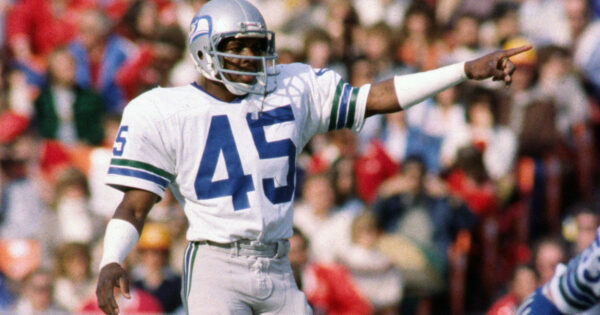
Kenneth M. Easley Jr., (Kenny) is formerly of the South Norfolk area of Chesapeake. Kenny attended Oscar Smith High School where he was a three sport performer in football, basketball and track and field. Kenny excelled in all three sports, but it was football where he made a name for himself. As the quarterback and free safety of the Oscar Smith HS football team, Kenny became an All City, Tidewater, Regional, State and All American player at quarterback. Oscar Smith retired his #5 jersey and placed him in its first ever class of Hall of Famer in the school’s history.

Kenny received a scholarship to attend UCLA as a defensive back, where he immediately became a starter and was voted the Pac 12 Freshman Player of the Year and the first freshman player in Pac 12 history to be named first team All-Conference. Kenny also led his team and the Pac 12 conference in interceptions with (7) as a freshmen. Kenny was voted Freshman Player of the Year by the Houston Sports Club in Texas. Kenny still holds the distinction of being the first and still the only player in UCLA and Pac 12 history to be named (football) first team All-Conference four consecutive years.

Kenny also became only the second player in UCLA football history to be named consensus All American for three consecutive years from 1978 – 1980. Kenny finished his career at UCLA as the school’s all-time leader in interception with (18). Kenny was voted into the UCLA Athletic Hall of Fame and was also a first ballot selection into the College Football Hall of Fame in 1991. Kenny’s #5 jersey was retired from play by UCLA and he has been named to every UCLA All-Time anniversary team since his graduation. Kenny’s #5 jersey was only the (6th) jersey ever retired by the UCLA Athletic Department alongside Lew Alcindor (Kareem Jabbar), Bill Walton and Jackie Robinson just to name a few. Kenny was also recently selected to the Pac 12 100 year anniversary (football) All Century First Team. He was one of only (2) UCLA Bruins named to the first team, the other was Jerry Robinson.

Kenny was drafted by the Seattle Seahawks as the (4th) overall pick in the first round of the 1981 draft, Kenny also became an immediate starter at strong safety. Kenny was voted first team All-Rookie and was voted AFC Rookie of the Year to conclude his first season in pro football. During Kenny’s career, he was voted to the Pro Bowl (5) times, All Pro (4) times, the Seattle Seahawks MVP (2) times and voted the 1983 AFC Defensive Player of the Year and the 1984 NFL Defensive Player of the Year, leading the National Football League in interceptions with (10).

Kenny’s pro career was cut short after (7) season’s, when he was found to have a very serious kidney ailment after a routine physical examination. Upon retirement in 1987, Kenny was named to the NFL 1980’s All Decade team and he was enshrined in the Seattle Seahawks Ring of Honor in 2002, at the time, one of only 6 players accorded that honor. Kenny was voted to the Seahawks All Time anniversary teams for 20 years, 30 years and recently for 40 years. Kenny was also voted into the Virginia Sports Hall of Fame in 1998, where he has now served on the Board of Directors for 14 years. In 2017 after retiring from football in 1987, Kenny was finally voted into the Pro Football Hall of Fame becoming Hall of Famer number 306.

Read More
Annual Jamboree

6th Annual Jamboree with Michael Cuddyer

Michael Brent Cuddyer is a former professional baseball outfielder who played 19 seasons in Major League Baseball (MLB) for the Minnesota Twins, Colorado Rockies, and New York Mets. Cuddyer was a two-time MLB All Star and won a Silver Slugger Award in 2013, when he led the National League in batting average.

Michael is a 1997 graduate of Great Bridge High School where he was a standout athlete in baseball, basketball, and football as well as student body president and National Honor Society member. Cuddyer was named Virginia’s Player of the Year and Gatorade National baseball Player of the Year in 1997. He was also a member of USA Today’s All-Star and the USA Junior National teams in 1997. During his high school career, he also played American Legion Baseball and was named the 2014 American Legion Graduate of the Year.

Cuddyer was drafted by the Minnesota Twins in the 1st round (9th pick) of the 1997 amateur draft, but did not sign until August. Cuddyer initially committed to play college baseball at Florida State but waited for the Twins’ signing bonus offer to increase before deciding to go professional. Consequently, he did not make his professional debut until 1998.

Michael Cuddyer played 11 seasons with the Minnesota Twins from 2001-11. He finished his Twins career playing in 1,139 games with 1,106 hits, 239 doubles, 35 triples, 141 home runs, 580 RBI, 606 runs scored and 411 walks. Cuddyer was named to the 2011 American League All-Star team and was part of six Twins AL Central Division Championship teams. Michael ranks ninth on the Twins all-time list in doubles, 10th in home runs and 11th in RBI. Cuddyer is one of 23 Twins to play 10-plus seasons with the club. Cuddyer rejoined the Twins organization as a Special Assistant on November 28, 2016. Cuddyer will work with Twins executives and coaches “to ensure development in player understanding of culture, talent evaluation and organizational vision.”

On December 16, 2011, Cuddyer signed a three-year deal with the Colorado Rockies. He chose to wear number 3 in order to honor Hall of Famer Harmon Killebrew, with whom he had grown close within the Twins organization before Killebrew’s death. In 2013, Cuddyer set a personal best with a 27-game hitting streak, the longest in Rockies history to that point. Cuddyer was also named an All-Star for the second time in his career. Cuddyer finished the 2013 regular season with a .331 batting average to win the batting title by 10 points over Atlanta’s Chris Johnson.

On August 17, 2014, Cuddyer again hit for the cycle, becoming the 30th player to hit for the cycle more than once and just the third player in history, after John Olerud and Bob Watson, to hit for the cycle in both the American and National Leagues.

Cuddyer signed a two-year contract with the New York Mets on November 10, 2014 and appeared in the first World Series of his career with the Mets in 2015. Michael signed with the Mets in part so he could play with his childhood friend David Wright.

On December 11, 2015, Michael Cuddyer announced his retirement via an article on The Players’ Tribune titled “Play Hard and Dream Big”. Mets general manager Sandy Alderson said in a statement. “As everybody knows, Michael throughout his Major League seasons has been a complete pro,” “He embodies and defines what the word ‘professional’ means — on and off the field.

Michael Cuddyer in his retirement letter stated “As hard as it is to retire, I know my family deserves to have me home full-time now,” he said. “It is time for my kids to develop their own dreams with their dad by their side.” “I’ve been a professional ball player for nearly two decades, but learning to become a professional was a lifelong learning process. A memory from high school jumps to my mind. One game as a freshman, I was stranded on second at the end of an inning. I let my frustration get the best of me. Trotting off the field to grab my glove, I tossed my helmet clear across the infield towards the dugout. A voice called me back over to the bench. It was my high school coach, Martin Oliver. “I don’t know what they did in Little League, but we don’t throw our helmets here. Come in here and take a seat with me the rest of the game.” I watched the rest of the game from the dugout. From that moment on, I never threw a helmet on a baseball field. But Coach Oliver wasn’t just talking about helmets. In a team sport, no player can act like he’s on his own island. It was an early lesson that has stuck with me.”

“As I’ve grown in the game, I’ve grown up as a person. This brings me to another reason for retiring, beyond the physical toll of the game. The beauty of family, once a distant idea, became an integral part of my identity. In 2006, I made the most important decision of my life when I married my wife, Claudia. She has been my rock and my constant ever since. Our relationship showed me a love greater than baseball. She has made me a better person and an even better baseball player. From our partnership, I’ve learned to value the importance of relationships and leadership. Claudia and I have three children: Casey, who is seven, and Chloe and Maddie, who are both four. Claudia has worked and volunteered for both Hickory High School and Great Bridge High School. I was very fortunate to have two wonderful parents, Henry and Marcia, to whom I am eternally grateful. They never once told me I couldn’t achieve my dreams. I am also grateful for my younger sister, Katie, who challenged me in sports, unwillingly at times, despite being five years younger. She made me tougher.”

“To my hometown in Virginia: you helped shape my life and career. From my PONY League teammates to the neighborhood kids who played football and baseball with me in the street, I’ll always be your buddy from Chesapeake.”

The Minnesota Twins recently announced that former Twins outfielder Michael Cuddyer and former General Manager Andy MacPhail have been elected to the club’s Hall of Fame. Cuddyer and MacPhail will become the 29th and 30th members of the Twins Hall of Fame when they are inducted during separate on-field pre-game ceremonies scheduled for Hall of Fame Weekend, August 19-20 when the Twins host the Arizona Diamondbacks at Target Field.

On April 6, 2017 Michael and his family planted an American Ash tree at Great Bridge Community in honor of his on and off the field all star accomplishments. Michael’s bats were made from Ash but his love of family and professionalism are All American Gold.

Read More
Annual Jamboree

5th Annual Jamboree with John Riggins

Our Keynote speaker March 3, 2016 was running back John Riggins who played 175 games in 14 seasons with the New York Jets and Washington Redskins. A Big Eight rushing champion who broke Gale Sayers’ rushing record at the University of Kansas, Riggins was the first pick of the New York Jets and the sixth player selected in the 1971 NFL Draft.

He played in New York for five years but signed with the Redskins in 1976 as a free agent. His nine-year tenure with the Redskins was interrupted in 1980, when he voluntarily sat out the season.

The 6-2, 230-pound Riggins was not a spectacular running back but he was a classic workhorse ball carrier who specialized in the tough yardage in the big games. He carried 2,916 times for 11,352 yards and 104 touchdowns during his career. He also caught 250 passes for 2,090 yards and 12 touchdowns. His 13,435 combined net yards are among the best ever, as is his 116 touchdowns by rushing and receiving.

Riggins played in the 1982 and 1983 NFC championship games and Super Bowls XVII and XVIII and made the most of his comparatively few postseason appearances. He was the Most Valuable Player in Super Bowl XVII with a then-record 38 carries for 166 yards. He capped off his big day with a 43-yard touchdown run that clinched Washington’s 27-17 victory over Miami.

Riggins rushed over 1,000 yards five times in his career and over 100 yards in 35 games, including a then-record six in post-season. He rushed 251 times for 996 yards and 12 touchdowns in nine post-season contests. Riggins followed his Super Bowl XVII success with a sensational season in 1983 when he rushed for a career-high 1,347 yards and a then-record 24 touchdowns. Following that season he was named All-Pro for the first time in his illustrious career.

Riggins finished out his career in Washington after the 1985 season and was elected to the Pro Football Hall of Fame in 1992. He has since worked in broadcasting and recently started a new career in acting.

Read More
Annual Jamboree

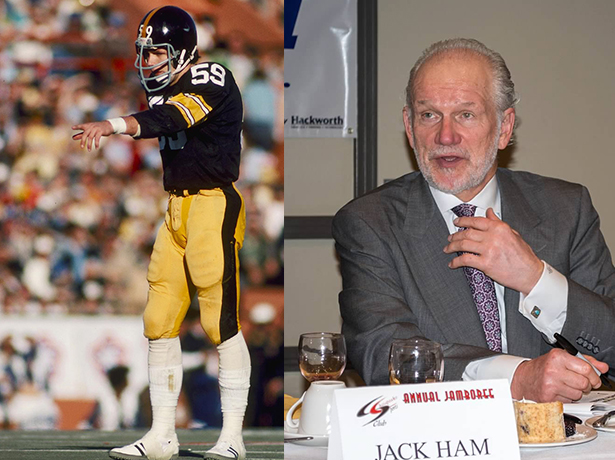
4th Annual Jamboree with Jack Ham

Jack Ham was a consensus All-American at Penn State and the 34th player taken in the 1971 National Football League Draft. His sensational rookie training camp earned him a starting left linebacker spot for the Pittsburgh Steelers in his first regular season game. The clincher was a three-interception performance against the New York Giants in the preseason finale.

Ham started all 14 games as a rookie and he continued to hold a regular job until his retirement after the 1982 season. Durable, he missed only four games his first 10 seasons in the NFL. Ham, who was born December 23, 1948, in Johnstown, Pennsylvania, quickly earned the reputation as a big-play defender and one of the finest outside linebackers in the game.

He wound up his career with 25 sacks, 21 opponents’ fumbles recovered and 32 interceptions. Blessed with speed, quickness, intelligence and exceptional mobility, Ham had the uncanny ability to diagnose plays and to be in the right defensive position at all times.

Along with defensive tackle Joe Greene and defensive end L. C. Greenwood, Ham was a key element in an exceptionally strong left side of the Pittsburgh defense during the team’s Super Bowl years. Jack played in Super Bowls IX, X and XIII but was forced to sit out Super Bowl XIV because of injuries. He also played in five AFC championship games and it was his 19-yard interception return to the Oakland 9-yard-line that setup the Steelers’ go-ahead touchdown in their first ever championship victory.

Ham was named to the All-AFC team for the first time in 1973 and then was a universal All-Pro choice the next six seasons through the 1979 campaign. In 1975, the Football News named him the Defensive Player of the Year. He was named to eight straight Pro Bowls.

Read More
Annual Jamboree

3rd Annual Jamboree with Jim Palmer

Our Guest Speaker James Alvin “Jim” Palmer (born October 15, 1945) is a retired American right-handed pitcher who played all of his 19 years in Major League Baseball (MLB) with the Baltimore Orioles (1965–1967, 1969–1984) and was elected to the Baseball Hall of Fame in 1990. Palmer was the winning pitcher in 186 games in the 1970s, the most wins in that decade by any MLB pitcher. He also won at least twenty games in each of eight seasons and received three Cy Young Awards and four Gold Gloves during the decade. His 268 career victories are currently an Orioles record. A six-time American League (AL) All-Star, he was also one of the rare pitchers who never allowed a grand slam in any major league contest.
Palmer appeared in the postseason eight times and was a vital member of three World Series Champions, six AL pennant winners and seven Eastern Division titleholders. He is the only pitcher in the history of the Fall Classic with a win in each of three decades. He was also the youngest to pitch a shutout in a World Series at age 20 in 1966. He was one of the starters on the last rotation to feature four 20-game winners in a single season in 1971.

Since his retirement as an active player in 1984, Palmer has worked as a color commentator on telecasts of MLB games for ABC and ESPN and for the Orioles on Home Team Sports (HTS), Comcast SportsNet (CSN) Mid-Atlantic and the Mid-Atlantic Sports Network (MASN). He has also been a popular spokesman, most famously for Jockey International for almost twenty years. He was nicknamed Cakes in the 1960s because of his habit of eating pancakes for breakfast on the days he pitched.

Early years
Palmer was born in New York City; shortly after his birth, Palmer was adopted by Moe Wiesen, a garment industry executive, and his wife Polly from Harrison, New York. After his adoptive father died in 1955, the 9-year-old Jim, his mother and his sister moved to California, where he began playing in youth-league baseball. In 1956, his mother married actor Max Palmer, from whom Palmer took his last name. Showing talent at the amateur level, upon graduating from Arizona’s Scottsdale High School in 1963, Palmer signed a minor-league contract at the age of 18.

Playing career
Palmer has been considered one of the best pitchers in Orioles – and major-league – history. He was a mainstay in the rotation during Baltimore’s six pennant-winning teams in the 1960s (1966 & 1969), 1970s (1970, 1971 & 1979) and 1980s (1983). Also, he is the only pitcher in big-league history to win World Series games in three decades (1966, 1970–71, 1983). One of his most amazing feats is that during his 19-year major league career of 575 games (including 17 postseason games), he never surrendered a grand slam. He was sometimes sidelined by arm, shoulder and back problems, but still won 20 games in 8 different seasons (1970–1973 & 1975–1978) and in 4 other seasons went 15–10 (1966), 16–4 (1969), 16–10 (1980) and 15–5 (1982). He was one of four 20-game winners in the Orioles starting rotation in 1971, only the second rotation in major league history to include four 20-game winners. With the death of Mike Cuellar in April 2010, Palmer is the last surviving member of that group, which also included Pat Dobson and Dave McNally. Palmer won spots on 6 all-star teams, 4 gold gloves, 3 Cy Young Awards, and 2 ERA titles. He led the American League in victories three times. Palmer retired in 1984 as a member of the defending World Champions. He is a member of major league baseball’s Hall of Fame.

Read More
Annual Jamboree

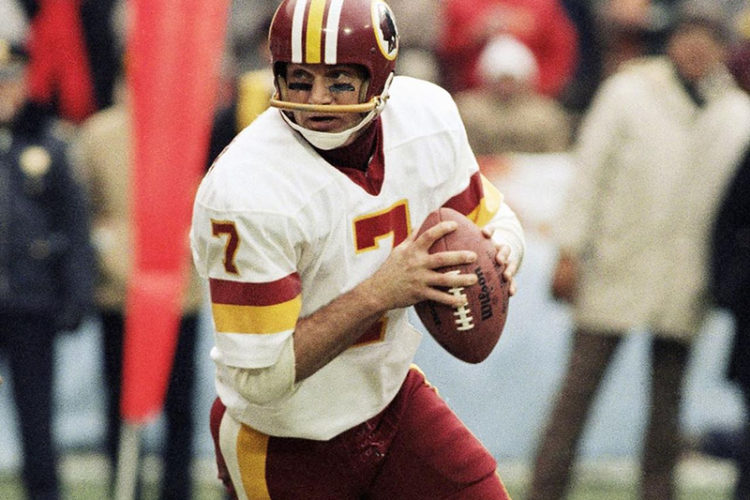
2nd Annual Jamboree with Joe Theismann

Our Scholarship program rewards the best and brightest from our city’s public and private high schools with scholarships for their continuing education. The proceeds from the Second Annual Jamboree, March 21, 2013 provided scholarship opportunities to twelve Chesapeake high school seniors who participate in high school sports. We were honored to have as our keynote speaker Joe Theismann. Joe is a former Notre Dame University and Washington Redskin legend. The Redskins defeated the Miami Dolphins 27-17 in Super Bowl XVII with Joe Theismann as quarterback.

Joe Theismann is an entrepreneur and the former star quarterback for the Washington Redskins. Most recently Joe has been working for ESPN on their NFL broadcast. Currently Joe works for the NFL Network as an analyst, broadcasting the Thursday Night NFL games And is co-host for the NFL Network show Playbook. Joe joined ESPN in 1988, reuniting with play by play voice, Mike Patrick. Theismann joined ESPN after spending two seasons as an NFL analyst with CBS sports.

A 12-year NFL veteran, Theismann played in 163 consecutive games from 1974-1985 and holds Redskins records for passing yardage (25,206), completions (2,044) and attempts (3,602). A two time Pro Bowl selection, Theismann led the Washington Redskins to a 27-17 victory over the Miami Dolphins in Super Bowl XVII.

Theismann was selected for the NFL’s Man of the Year in 1982 for his community service and dedication to the health and welfare of children. He won the leagues 1983 Most Valuable Player Award for leading the Redskins to an NFL-recorded 541 points and a second consecutive Super Bowl appearance. His career ended abruptly in 1985 after sustaining a broken leg during a game against the New York Giants on national television.

Theismann graduated in 1971 from the University of Notre dame where he received All-America honors and led the Fighting Irish to consecutive Cotton Bowls and was runner up to Jim Plunkett in the Heisman Trophy balloting. In 2003, Theismann was inducted into the College Football Hall of Fame. Theismann began his career in 1971 with the Toronto Argonauts and the Canadian Football League, after being drafted by the Miami Dolphins and the Major League Baseball’s Minnesota Twins.

Joe Theismann, a much sought after motivational speaker, also oversees a popular Washington DC restaurant that bears his name. Born September 9, 1949, he is also the author of the Complete Idiots Guide to Understanding Football like a Pro.

Read More
Annual Jamboree

1st Annual Jamboree with Steve Garvey

Keynote Speaker: Steve Garvey, Former Major League Baseball First Baseman and Businessman.

Steven Patrick Garvey (born December 22, 1948), nicknamed “Mr. Clean” because of the squeaky clean image he held throughout his career in baseball, is an American former Major League Baseball first baseman and current Southern California businessman. Garvey was the 1974 NL MVP, ten-time All-Star, and holds the National League record for consecutive games played (1,207).

A name synonymous with excellence and success. One of baseball's most popular and durable players during one of baseball's greatest era's, Steve Garvey is known to even the most casual of baseball fans everywhere. A 10-time All Star and 1974 National League MVP, Garvey is destined for enshrinement at Cooperstown.

Starring for the Los Angeles Dodgers and San Diego Padres in his illustrious career, Steve Garvey was nicknamed the "Iron Man" for setting the National League consecutive games record with 1,207 straight. Simply put, Steve Garvey was a complete player - equally adept with the bat and glove - hitting for average and power to go along with his nearly flawless defense.

Since 1988 he has been running Garvey Communications mainly involved in television production including infomercials. He is also the host of Baseball's Greatest Games. In addition he is hired out to do motivational speaking, mainly for corporations. Currently, Garvey works as a greeter for VIP season ticket holders and as a consultant for the Los Angeles Dodgers. He currently resides in Los Angeles and Palm Desert, California and a well respected business speaker.

Read More