Annual Jamboree

13th Annual Jamboree with Darrell Green

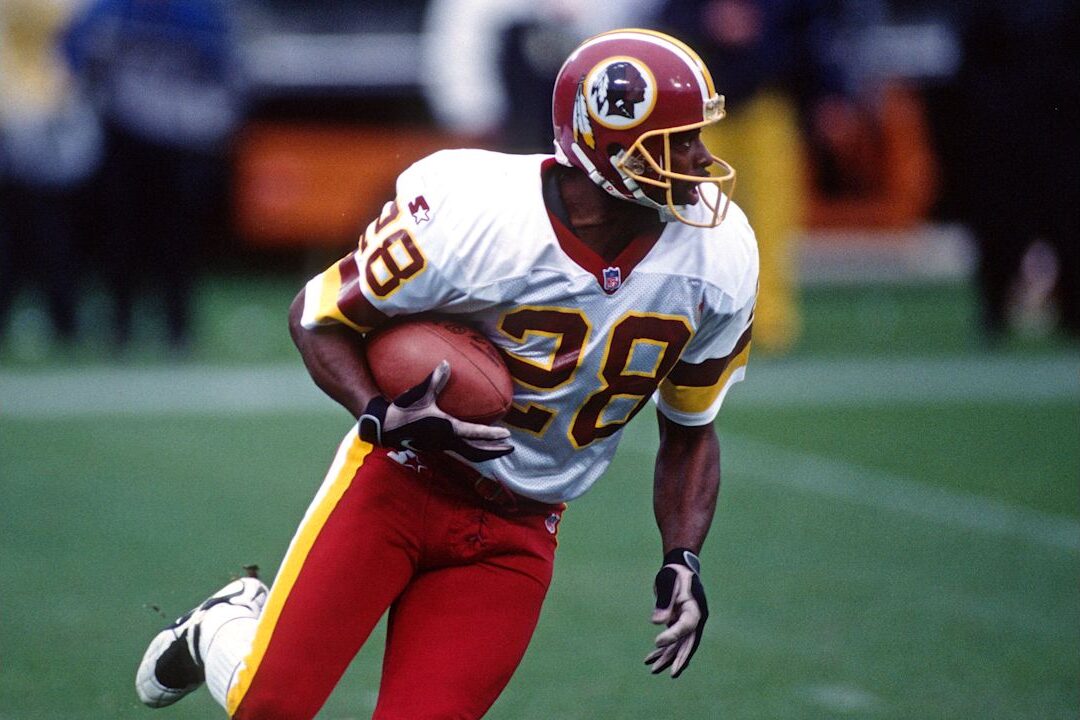
Darrell Green is a former professional football player who was a cornerback for the Washington Reskins of the National Football League for 20 seasons. Considered to be one of the greatest cornerbacks and fastest players in NFL history, he played college football for the Texas A&M–Kingsville Javelinas and was drafted by the Redskins with the last pick in the first round of the 1983 NFL draft. Green played in 295 games with Washington, winning Super Bowls XXII and XXVI, before retiring in 2003. He was named the 1996 NFL Man of the Year, inducted into the 2008 Pro Football Hall of Fame, and included on the NFL 100th Anniversary All-Time Team.

Darrell Ray Green was born on February 15, 1960, in Houston, Texas, attending Jesse H. Jones High School. While there, he was an All-State selection in track and an All-City pick in football. Green was small but made the junior varsity football team his junior year and then made the varsity team as a senior.
Darrell was accepted and attended Texas A&I University (now known as Texas A&M-Kingsville). While there he played football and ran track. He finished his Bachelor of Science degree in general studies at St. Paul's College in Lawrenceville, Virginia. In track and field, Darrell set numerous national and conference records and earned ten 

All-America certificates. Green's all-time collegiate best in the 100 was 10.08, 20.50 in the 200 meters and 45.90 in the 400 meters. He was named the most valuable track performer at the 1982 and 1983 Lone Star Conference Championships. He won gold medals at the LSC meet in the 100 meters in 1981 and in the 100 meters and 200 meters in 1982 and in 1983.
In college football in1982, Green was selected by his teammates as captain, was named a first-team All-American, and was the Most Valuable Player in the Lone Star Conference. During his senior year, Green had 56 tackles, four interceptions and two punt returns for touchdowns. He was selected to the Lone Star Conference Team of the Decade for the 1980s.
Upon graduation, Darrell was relatively small but very fast and was noticed in the 1983 NFL draft by several NFL teams. He was the last player selected in the first round (28th overall) of the 1983 NFL draft by the Washington Redskins.
The first time he touched the ball with Washington, during a preseason game against the Atlanta Falcons, he returned a punt 61 yards for a touchdown. During his first regular season game, he made his first big play when he ran down running back Tony Dorsett of the Dallas Cowboys to prevent a touchdown. Green started all 16 regular season games during his rookie season and finished fourth on the team in tackles with 109 and led the team with 79 solo tackles. He was runner-up for the Associated Press NFL Rookie of the Year Award.


During the 1987 season, the Redskins went 11–4 and Green had a very successful year. He registered a career-high three interceptions in a game against the Detroit Lions on November 15, 1987. Two of his more notable performances occurred in that postseason. One happened during a divisional playoff game against the Chicago Bears, where he returned a punt 52 yards for the game-winning touchdown. Green tore rib cartilage while vaulting over a tackler during the return, but he merely grabbed his side and kept running until he scored. Then in the 1987 NFC Championship game, on a pivotal fourth-down play at the Washington goal line with 56 seconds remaining, Green knocked away a pass intended for Minnesota's Darrin Nelson to secure a Redskins 17–10 victory that enabled the team to go to Super Bowl XXII.


Green was also successful in the 1990s. In 1997, Green returned an interception 83 yards for a touchdown against the Philadelphia Eagles, which was the longest return of his career. Then on December 13, 1997, he played in his 217th career game as a Redskin, breaking Monte Coleman's record for games played. In a 1999 game against the Arizona Cardinals, he intercepted his 50th NFL pass against Jake Plummer at FedExField.


In the last game of his career on December 29, 2002, Green and the Redskins defeated the Dallas Cowboys 20–14 at FedExField. During the game, he returned a punt on a reverse from Champ Bailey for 35 yards, which is the longest gain of any kind for a player his age (42 years, 327 days).


Green retired after the 2002 season at the age of 42, the oldest Redskin, having played for six head coaches: Joe Gibbs, Richie Petitbon, Norv Turner, Terry Robiskie, Marty Schottenheimer, and Steve Spurrier. For several years, Green and former Los Angeles/St. Louis Rams offensive tackle Jackie Slater were the only players in NFL history to play for the same team for 20 seasons; kicker Jason Hanson broke this record when he retired after 21 seasons with the Detroit Lions.


In his 20 NFL seasons, Green recorded 54 interceptions, which he returned for 621 yards and six touchdowns. He also added two additional touchdowns on interception returns in the postseason. Three times Darrell recorded a career-best of five interceptions in a season (1984, 1986, and 1991). Green also returned 51 punts for 611 yards and recovered 10 fumbles, returning them for 131 yards and two touchdowns. Also known for staying healthy, he missed just 25 games throughout his career. He missed two months after sustaining a broken arm in a 24–17 win over the Atlanta Falcons on September 15, 1992. Darrell is a four-time winner of the NFL's Fastest Man competition, and the only undefeated multiple winner in NFL history. Green is rumored to have the fastest recorded 40-yard dash time of 4.09, which he is said to have run in Washington's 1986 training camp.


Green was with the Redskins for their victories in Super Bowls XXII and XXVI and started in their loss to the Los Angeles Raiders in Super Bowl XVIII. Green recorded an interception in Super Bowl XXVI and a then-record 34-yard punt return in Super Bowl XVIII. Green in his final year with the Redskins in 2002 had an amazing resume. He was named All-Pro in 1986, 1987, 1990, and 1991 and was voted to seven Pro Bowls. He is a member of the National Football League 1990s All-Decade Team as well as winning all four NFL Fastest Man competitions he participated in. His pregame rituals included eating and sticking Tootsie Rolls in his sock claiming that the candy helped him run fast. Washington retired his number 28, during halftime of a home game against the Carolina Panthers on October 20, 2024.
Congratulations and Welcome Darrell Green.

Read More
Annual Jamboree

12th Annual Jamboree with Christian Laettner

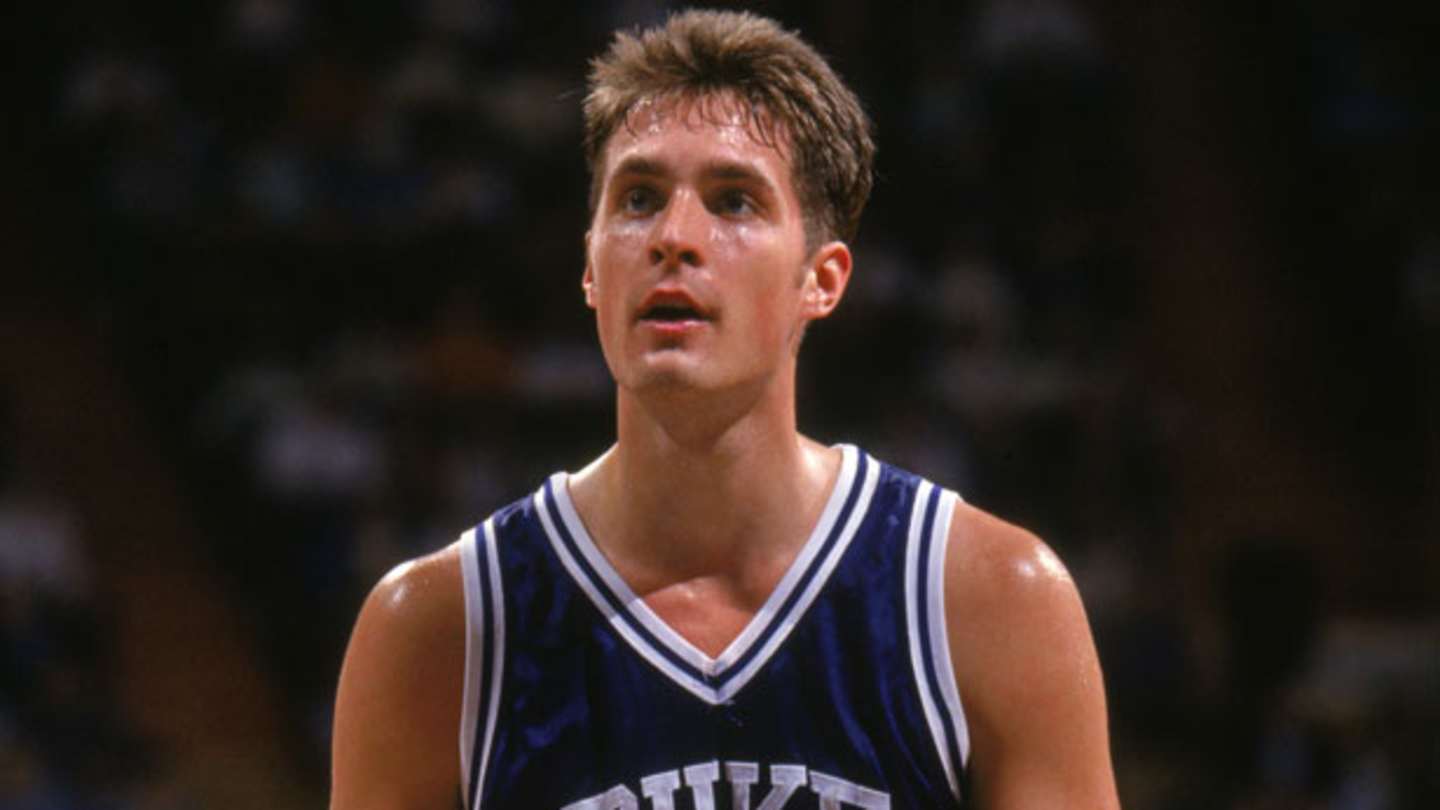
Christian Laettner is a former professional basketball player, best known for his time as a star at Duke University and his iconic moments in NCAA and NBA history. From Angola, NY, Laettner honed his skills on the courts of Nichols School where he won two state championships and was the all-time leading scorer with 2006 points. Along the way, he appeared in the Empire State Games three years, was All-Western New York Player of the Year his junior and senior years, named Gatorade Player of the Year in New York State, voted a member of the National High School Athletic Coaches Association All American Team, and participated in the McDonald’s All American Games in New Mexico and Washington DC, two prestigious all-star games for graduating seniors.

After committing to play collegiately for legendary coach Mike Krzyzewski and Duke University, Laettner would go on to become one of the most decorated student-athletes in NCAA history guiding the Blue Devils to back-to-back national championships in 1991 and 1992. His list of honors includes three-time All-America (1990, 1991 & 1992), National Player of the Year (1992), two-time ACC Athlete of the Year (1991 & 1992), ACC Player of the Year (1992), three-time All-ACC (1990, 1991 & 1992), ACC Tournament MVP (1992), four-time ACC All-Tournament (1989, 1990, 

1991 & 1992), NCAA Final Four MVP (1991), two-time NCAA All-Final Four (1991 & 1992), four-time NCAA Tournament All-Regional (1989, 1990, 1991 & 1992), two-time NCAA Tournament Regional MVP (1990 & 1991) and three-time Swett-Baylin Award winner as Duke's team MVP (1990, 1991 & 1992). Laettner is the NCAA Tournament's all-time leader in points (407), free throws made (142), free throws attempted (167) and games played (23), and, on Duke's career charts, ranks first in games played (148), three-point field goal percentage (.485), free throws made (713) and free throws attempted (885), third in points (2,460), rebounds (1,149) and field goals made (834), fourth in field goal percentage (.574), and fifth in blocked shots (145).

In addition to all of his accomplishments, he is probably best known for one of the most iconic moments in sports history. In the 1992 East Regional Final against Kentucky, Laettner put together an all-time performance going a perfect 10 for 10 from the field and 10 for 10 from the free throw line, capping it off with a game-winning last second buzzer beater to send the Blue Devils to the Final Four and keep their hopes for back-to-back championships alive. The game, which the Blue Devils won 103-102, is considered by many as the greatest college basketball game ever played, earned Laettner the 1993 ESPY Award for College Basketball Play of the Year and Outstanding College Basketball Performer of the Year.

His jersey number 32 was retired by the school on February 26, 1992, and, after being the third player chosen in the 1992 NBA Draft by the Minnesota Timberwolves, Laettner enjoyed a 13-year professional career that included a spot on the league's All-Rookie team in 1993 and All-Star squad in 1997. Over his NBA career, Laettner was a solid contributor, known for his basketball IQ, scoring ability, and leadership on the court. He finished his NBA tenure with career totals of 868 games played, 11,121 points and 5,806 rebounds. Named one of the ACC's top 50 male athletes for the first 50 years of the conference in 2003, Laettner also was a member of the United States team that captured the gold medal at the 1992 Olympic Games in Barcelona, Spain.

After retiring from the NBA, Laettner has been involved in various business ventures, including real estate, and is also active in community and charity work, particularly supporting basketball and youth development programs. He has consistently given back here in Hampton Roads as an ambassador of PingPongGIVES Charity Foundation and its mission to improve mental wellness. Laettner remains a beloved figure in college basketball. His pivotal role in Duke’s success during his time with the program, and his Olympic achievements have cemented his legacy as one of the greatest basketball players in American sports history.

Read More
Annual Jamboree

11th Annual Jamboree with Rocky Bleier

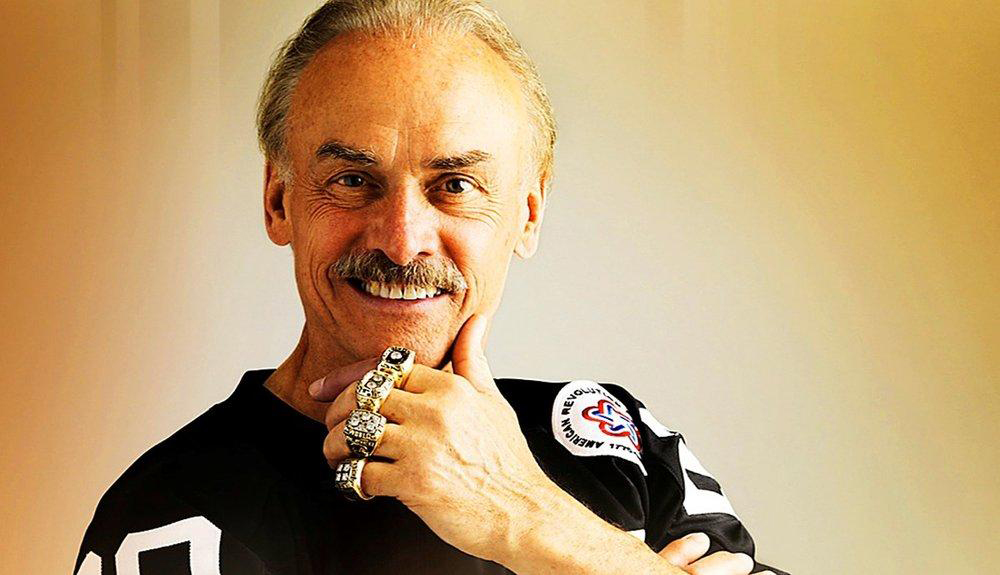
Robert “Rocky” Bleier was born on March 5, 1946, in Appleton, Wisconsin. He is the oldest of four children to Bob and Ellen Bleier. Bleier was a three-sport athlete at Xavier High School in Appleton, competing in football, track, and basketball (he was a captain for all three sports).

During his time at Xavier, Bleier was an all-conference selection as a linebacker and defensive back. Bleier made such an impression as a prep star that he was sought by nearby colleges. Staying near home, he accepted a scholarship offer from the University of Notre Dame. During the 1966 season, Notre Dame finished 9-0-1 and won the national championship. That season, Bleier rushed 63 times for 282 yards and four scores along with four receptions for 17 yards and one touchdown.

Bleier’s teammates voted him team captain during his senior year in 1967. Before the last game of his senior year, Bleier suffered a torn ligament. Rocky missed the final game, and it looked like that would be the end of his career as a football player.

A few months later, Bleier was having dinner with friends when some of his buddies overheard an area sportscaster who was announcing a list of local college players who had been selected during the third day of the 1968 NFL Draft.

The Pittsburgh Steelers had selected Rocky as the 417th pick of the 16th round. Bleier was inexplicably a professional athlete. Bleier was thrilled until he realized who drafted him. The Steelers were founded in 1933 and had only experienced two decent seasons in their history. 1968 would be no different. Pittsburgh stumbled to a 2-11-1 record in what would be head coach Bill Austin’s final year.

As a rookie in 1968, Bleier didn’t get much playing time. He toted the ball six times for 39 yards and had three receptions for 68 yards. Then in December, his first season was cut short due to an unexpected draft letter from the local Draft Board. He was drafted to serve in the military during the Vietnam War. Bleier informed the Steelers and then volunteered for duty in South Vietnam. After eight weeks of basic training and another eight weeks for advanced infantry training, Bleier was shipped off to Vietnam in April of 1969. He was in-country for only a few months stationed with the 196th Light Infantry Brigade at Hiep Duc Valley, near Danang, at a post called LZ Siberia when his unit received a call that would greatly affect his life.  His company received a call from their sister company in August 1969 saying they were being ambushed by North Vietnamese soldiers and had many wounded and casualties. Bleier who carried a grenade launcher, and his unit were flown to help extract the ambushed company. “We didn’t get to them until late at night and when we finally got there.” We ran into the ambush, but things didn’t go as planned. The NVA were entrenched—deadly, ferocious, unseen but seemingly everywhere—and Company C walked into the firefight not knowing they were outmanned four to one. They battled through two bad days and brutal nights. On the morning of Aug. 20, 1969, Bleier and a few others emerge from some woods into a clearing when they come under fire from an NVA machine gun. Bleier grabs his grenade launcher and crawls about 20 yards to get a bead on the machine gun. It is 40 yards away. Bleier loads and … feels a dull thud in his left thigh. He’s shot in the leg and is pinned down by enemy fire. Any bandages he carries are in his pack, in the open where he left it behind. Still, hoping to provide cover for others, he lobs a few rounds where the automatic weapons’ fire is coming from. He drags his body and weapon to some protective bushes.

From this position Bleier can’t see the machine gun’s location, but others call out and direct his aim as he lobs grenades—three dozen rounds—toward the source of the enemy fire. Then, out of ammunition, Bleier lies still, for almost two hours, and waits. He prays to God that he gets out of there alive.

In time Bleier and others begin a long crawl to safety. Twenty-two of them together now, including five wounded.

130 NVA silently followed and about 2 p.m. the NVA assault resumes. A NVA grenade exploded at Bleier’s feet, that left his right leg quivering uncontrollably, his right foot maimed, and his body riddled with shrapnel. The NVA retreated as a third platoon arrived to evacuate the wounded and get them to a medevac helicopter poised two miles away. Rocky and his fellow soldiers were extracted. Rocky was then medevacked to Japan where doctors removed 100 shards of shrapnel from his shredded foot and leg. He was told that he would never walk again, never mind play professional football. Rocky was awarded the Bronze Star and a Purple Heart for his military service.

Bleier began the arduous rehabilitation process on his foot.

In 1970 Rocky received a note from Steelers owner Art Rooney stating “Rock, the team’s not doing well, we need you.” Rooney also informs Rocky that he has been placed on the team’s injured reserve list. Rooney, when he first learned of Bleier’s injuries, decided to pay Rocky’s $20,000 injured reserve salary so the war veteran could stick with his rehab. Rooney also pays for further surgeries.

Bleier with one foot shorter than the other, shoes of different sizes, returns to the Steelers and would become an essential force in one of the NFL’s most celebrated dynasties.

1970-1971 - Pittsburgh Steelers Injured Reserve and Steelers Taxi Squad.
Rocky spent 2 full years of intense training and rehab to regain his spot in the active roster.
1972 -Active Roster for the Pittsburgh Steelers lineup.
1974- Earned a spot in the starting backfield. The Steelers went on to win their first Super Bowl.
1975- Steelers vs Packers. One of the best games of Rocky’s career. Rushed for 163 yards. Steelers go on to win their second Super Bowl.
1977- Scored the "go-ahead" touchdown in Super Bowl XIII.
1978- Steelers win their 4th Super Bowl.
1980-Rocky Retired from the Pittsburgh Steelers. Four-time Super Bowl Champion (IX; X; XIII; XIV)
1980 to Present- President, Rocky Bleier, Inc.

Rocky Bleier was inducted into the Steelers Hall of Honor as a member of the Class of 2018.

Rocky Bleier finished his career with 25 touchdowns and 136 receptions for 1,294 yards and 3,855 yards rushing, including 1,036 in 1976 when both he and Franco Harris finished the season with over 1,000 yards rushing. Bleier is presently ranked ninth in the Steelers all-time rushing list. But it was Bleier’s ability to get the tough few yards, to make the clutch catch, to throw the critical block—and his life of service and perseverance—that made him a fan favorite in blue-collar Pittsburgh, and across America. Rocky Bleier, a story of honor, sacrifice, courage, and singular triumph against momentous tides. Please Welcome Rocky Bleier to Chesapeake!!

1980 to Present- President, Rocky Bleier, Inc.

Read More